
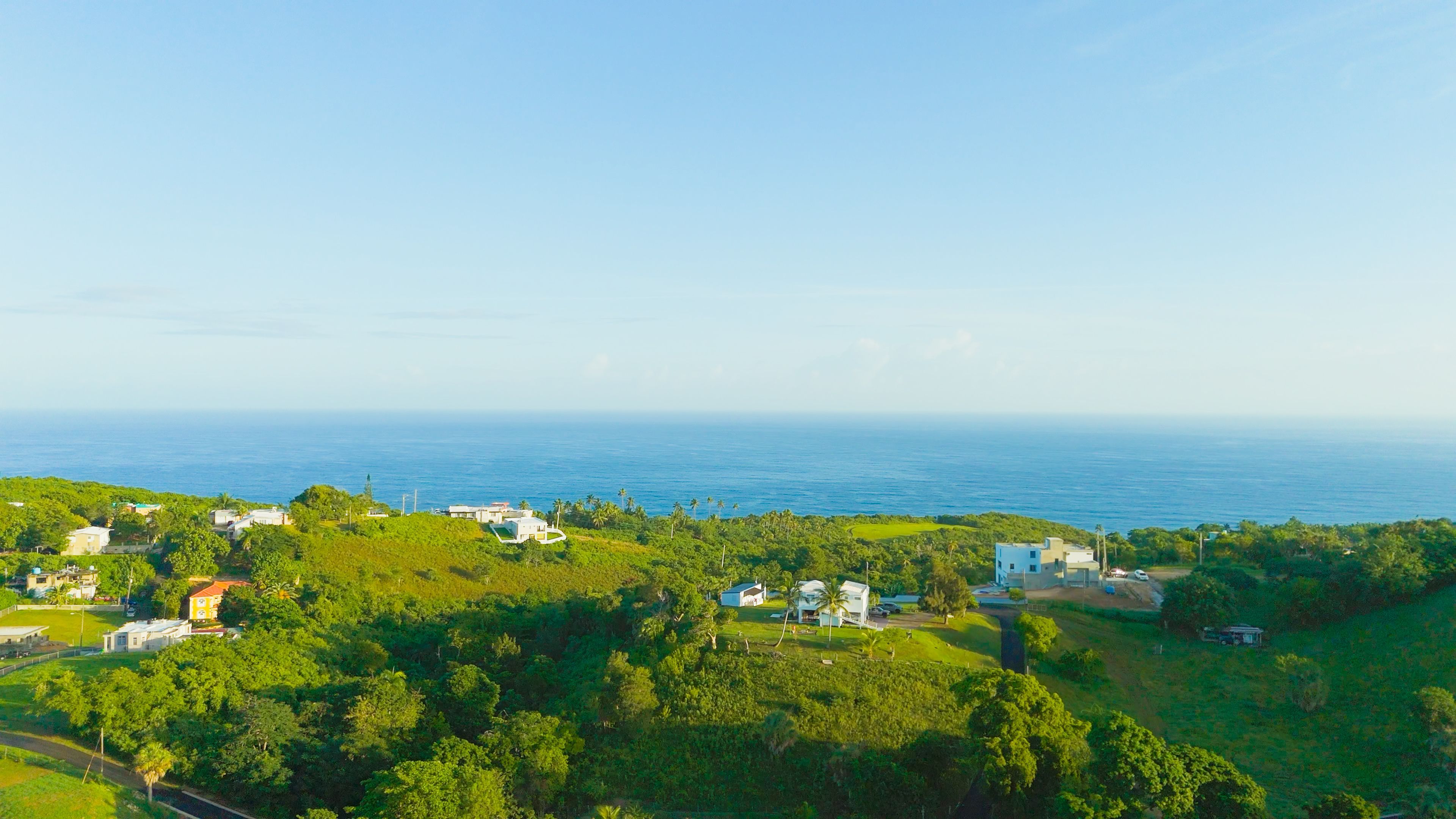
You found the lot. The Pacific fills the frame, the price looks fair, and the math in your head says building will cost far less than buying finished. That math is where most buyers go wrong.
Ocean view lots in Costa Rica can be real opportunities, but the land is often the smallest number you will face. Here are seven things to know before you buy one.
Key takeaways
- Construction is only part of the bill, and fees sit on top.
- No permit is issued without a water letter, and permits take months.
- Turnkey trades customization for a known price and no permit risk.
1. Building a House in Costa Rica Costs More Than the Per-Meter Price
Building a house in Costa Rica costs roughly $1,028 to $2,050 per square meter for construction alone as of mid-2026, according to this Costa Rican architect's 2026 cost breakdown. That covers materials and labor, not the finished, furnished home.
Luxury finishes push it higher. Design-build firm Studio Octava puts high-end turnkey homes at $250 to $300 per square foot, and ocean view lots are rarely flat, simple, or easy to reach.
2. Fees Add Up Fast
Soft costs are where budgets quietly break. A Costa Rican design firm's fee guide puts professional design and inspection fees at 10.5% to 15% of project cost. A CFIA fee (paid to the national college of engineers and architects) and a municipal fee come on top. On a luxury home, the total reaches six figures.
3. How Long Construction Permits Take in Costa Rica
Expat Focus puts the full permit process at two to nine months. Each step waits on the last:
- Land use certificate (uso de suelo). Confirms a home is allowed on your lot. Pull it before you sign.
- Water availability letter. From AyA, the national water utility, or the local ASADA (community water board).
- Soil study. Required on complex or risky terrain, per this Costa Rican advisory firm.
- Environmental review (SETENA), if triggered. Common for large lots or sensitive areas, and it can add weeks to months, according to this architecture and engineering firm.
- CFIA plan registration. Your architect submits the full plan package online. This step is fast, per Vince Studio.
- Municipal building permit. Issued once everything else is approved.
- INS worker risk policy. Mandatory insurance before work starts.
Near the beach? Check the lot against Law 6043, the Maritime Terrestrial Zone Law, which governs the 200 meters measured from the high tide line. Our guide to titled vs. concession property covers what to verify.
4. Water Letters Are the Biggest Permit Risk in Guanacaste
No water letter, no building permit. And in Guanacaste, letters are not a given.
The CFIA itself has publicly called on AyA to guarantee water availability letters, noting the shortfall was stalling new projects. The Voice of Guanacaste reported that AyA barred dozens of ASADAs in the province from issuing new letters. Closer to Playa Negra, the Matapalo ASADA in Santa Cruz canton has used more water than it has for years.
5. The View Costs Extra to Reach
Slopes mean retaining walls, longer driveways, and deeper foundations, none of it priced until the soil study returns. Rainy season runs May through November and slows exterior work. And crews are in demand, since Santa Cruz is one of the busiest building areas in the province, according to the Costa Rican Chamber of Construction via El Financiero.
6. How Long It Takes to Build a House in Costa Rica
Builds run 8 to 24+ months, and renting nearby in Guanacaste during construction adds a monthly cost the whole way, according to this 2026 build vs. buy analysis.
Consider an illustrative buyer from Denver planning a 3,000 square foot high-end home on a hillside lot. Her rough budget:
- Construction: about $574,000
- Design, CFIA, and municipal fees: another $70,000 to $100,000
- Rent during an 18-month build: about $54,000
That is roughly $700,000 before the land, retaining walls, pool, furniture, or a single change order.
If your numbers look similar, price a finished home side by side. Book a 30-minute call to walk through the comparison.
7. Buying Land vs Turnkey in Costa Rica: Pros and Cons
The market is already leaning one way. Permits for single-family homes are falling while condominium permits are climbing sharply in 2026, according to the Costa Rican Chamber of Construction.
Building on a lot
- Pro: Full control over design, orientation, and the exact view
- Con: Water, permit, and budget risk sit with you for a year or more
Buying turnkey
- Pro: A known price, solved permits, and use from delivery day
- Con: Less room to customize, and the developer's risk is priced in
Now picture the same Denver buyer choosing turnkey. Her first year looks different: no permit queue, no rent on top of a build, and her first stay booked the month she closes.
Black Coast Estates is a private community of turnkey homes in Playa Negra, south of Tamarindo. Developer New Mountain Investments has completed four communities in Utah since 2016, and The Serena Company handles estate management between stays. See The Residences, and read The 5 Hidden Risks of Costa Rica Real Estate before choosing either path.
The Bottom Line
Ocean view lots in Costa Rica can work, but only when you budget the whole project. Get the land use certificate and water letter before you sign anything, budget for fees and site work on top of construction, and price in a long build.
Rather skip the build and still wake up to the Pacific? Book a 30-minute call to see what is available at Black Coast.
Frequently Asked Questions
How much does it cost to build a house in Costa Rica?
Construction alone runs about $1,028 to $2,050 per square meter ($88 to $190 per square foot) as of mid-2026. High-end turnkey homes, especially on complex coastal lots, often land at $250 to $300 per square foot or more. Add 10.5% to 15% in professional fees and about 2% in CFIA and municipal charges, plus site work, water infrastructure, and furnishing.
How long does it take to get a construction permit in Costa Rica?
Most projects take two to nine months from the first document to an active permit. CFIA plan registration can take just two business days, but the land use certificate, water letter, soil study, and any SETENA environmental review come first. The municipal permit itself usually takes 2 to 4 weeks once everything else is approved.
How long does it take to build a house in Costa Rica?
Most builds take 8 to 24+ months, depending on home size, location, and permit complexity, and that clock starts after land purchase. Permitting alone can take two to nine months. Hillside lots, SETENA environmental reviews, and May to November rains tend to push projects toward the longer end of that range.
Can foreigners build a house in Costa Rica?
Yes. Foreign nationals hold essentially the same ownership and construction rights as Costa Rican citizens. The main exceptions are land inside the maritime zone, governed by Law 6043 and measured 200 meters from the high tide line, and areas along national borders. Plans must be prepared and filed by a CFIA-licensed architect or engineer.
Do I need a water letter to build in Costa Rica?
Yes. The municipality will not issue a building permit without a current water availability letter from AyA or the local ASADA. In parts of Guanacaste, some ASADAs have been barred from issuing new letters because of capacity or technical problems, so confirm the letter exists and is valid before you buy the lot.
Is it cheaper to build or buy in Costa Rica?
New construction in Costa Rica runs about 20% to 30% more than comparable existing homes in 2026, especially in coastal markets like Guanacaste. Building from a lot can still make sense for buyers who want full control and have time to manage the process. Buyers who want to use the home sooner usually compare against finished or turnkey homes.